
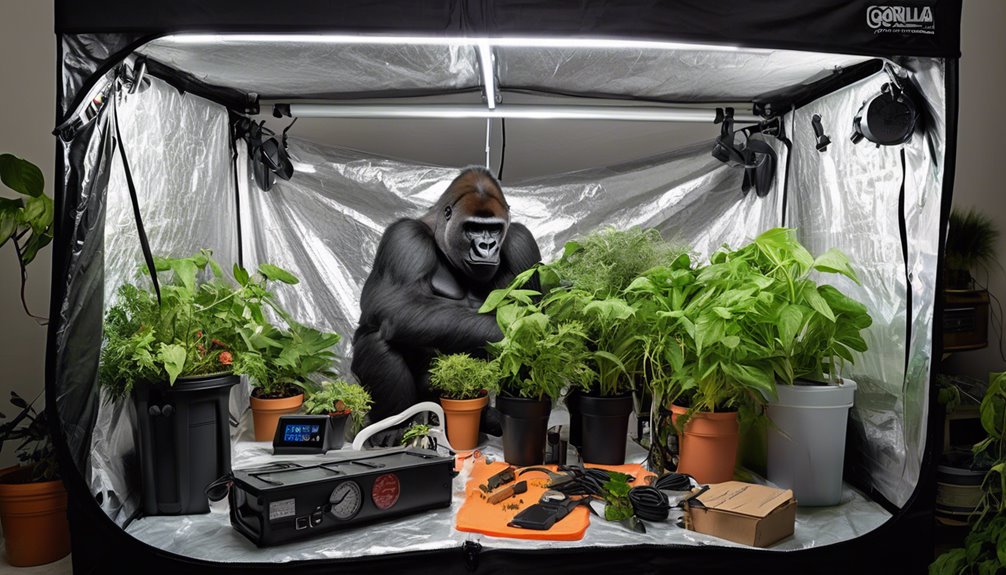
Step-by-Step Guide: Setting Up a Gorilla Grow Tent
To set up your Gorilla Grow Tent, begin with an inventory check of all components and clear a flat area for unpacking. Assemble the frame using the right connectors, ensuring stability at each step. During tent installation, attach the extension skirt and secure the fabric carefully. Double-check all poles and connectors for a sturdy structure, keeping airflow in mind. Finally, maintain a consistent environment and monitor for common issues. Keep going to discover more tips for optimizing your setup!

Key Takeaways
- Begin by conducting an inventory check of all tent components and clear a flat area for unpacking the tent body.
- Assemble the base frame using connectors and secure vertical poles into floor pockets for stability.
- Attach the extension skirt at the backside, ensuring proper alignment while securing edges with zippers.
- Distribute weight evenly across support beams and secure drape edges with Velcro strips before zipping walls.
- Regularly inspect zippers, connectors, and humidity levels to maintain a stable and healthy grow environment.
Preparation & Unpacking
 Before you engage in setting up your Gorilla Grow Tent, it’s crucial to prepare and unpack everything properly. Start by conducting an inventory check. Confirm that you have all components, including poles, connectors, and the tent body. Cross-reference item counts with the specifications to verify you’ve got the right number of parts.
For effective unpacking techniques, clear a large, flat area and lay the tent body flat to avoid creasing. Separate the bottom and top corner pieces along with the connectors to streamline your assembly. The Gorilla Grow Tent is known for being the tallest and strongest grow tent available, which adds to its appeal for both expert growers and beginners. Additionally, ensure that you choose a tent that features durable fabric to enhance its longevity and reliability.
Be gentle with the fabric, handling it carefully to maintain its integrity. Inspect for any imperfections, like damaged zippers or seams, before you proceed.
Framework Assembly
Framework assembly is a crucial step in setting up your Gorilla Grow Tent, and getting it right guarantees your plants thrive in a stable environment.
Begin by carefully assembling the base frame using the required connector types—4-way and 3-way connectors. Follow these steps for a solid structure:
- Insert vertical poles into floor pockets, aligning them with the connectors.
- Reinforce corners with corner pieces for added stability.
- Use pole types A, B, or C+ and attach them via snap-lock fittings to build upward layers.
- Test the frame’s stability by gently shaking poles after each section is added.
Remember to avoid over-tightening connectors to prevent warping. Additionally, ensure that you insert vertical B poles into the frame to enhance the overall strength of your assembly.
As you work, stay mindful of your setup’s integrity; each piece plays a crucial role in supporting your plants’ growth. Your careful assembly will guarantee a secure and efficient environment for your green friends. Note that Gorilla Grow Tents come in various sizes, including larger models like 10 x 20, which can accommodate more plants as needed.
Tent Installation
Once you’ve assembled the framework, it’s time to install the tent fabric, making certain that it fits snugly and securely over your structure.
 Begin by attaching the extension skirt at the backside for stability. Gradually zip the skirt while aligning the edges, using Velcro assist strips on the tent floor for guidance. Be careful not to stretch or force the skirt over the poles, as this could damage the seams.
Next, position the roof frame, gently guiding the fabric corners over the poles without excessive force. Distribute the weight evenly across support beams to maintain roof stability.
Unfold the tent fabric completely and lay it flat inside the frame. Secure the drape edges to the Velcro strips and zip the walls from the base upward to prevent bunching.
Following these installation tips guarantees your tent design is effective and functional, providing a safe haven for your plants.
Component Securing
With the tent fabric securely in place, it’s time to focus on component securing to confirm a sturdy and stable setup.
Proper component durability is essential, so follow these securing techniques:
- Assemble B-poles first: Use connectors and corner pieces to build a solid base. Confirm each pole clicks into place securely.
- Secure with corner locks: Engage corners fully with poles to avoid any loose ends that can compromise stability.
- Test connections: Walk around the frame lightly to verify all poles are stable before adding the tent material. Ensure all poles securely snap into place for maximum support.
- Avoid over-tightening: Keep joints snug, but don’t force them. This prevents warping and confirms a proper fit.
Accessory & Load Management
To guarantee a successful grow tent setup, managing accessories and loads is essential for maintaining stability and functionality.
 Start by positioning your heaviest equipment, like LEDs, at the center to guarantee proper load distribution. Group heavy accessories near load-bearing beams and use the recommended hangers to align with weight management limits. Proper ventilation systems are also important to ensure that the air circulation remains optimal for plant growth. Additionally, ensure all components are present before starting the setup to avoid any disruptions during assembly tent setup preparation.
Distributing multiple units across different poles will prevent overloading any single point. As you install, remember to incorporate optional extension kits in critical areas for added support.
It’s also crucial to test pole rigidity after assembly to avoid flexing under load. For CO2 tanks and reservoirs, keep them at lower levels for stability.
Regularly inspect connections and document equipment weights for effective seasonal load redistribution. By carefully managing these aspects, you’ll create a safe and efficient environment for your plants to thrive.
Final Checks
Before you start using your grow tent, it’s vital to conduct final checks to guarantee everything operates smoothly.
Performing these final inspections guarantees safety measures are in place and that your setup is ready for successful growth. Here’s what you should focus on:
- Handles & Zippers: Verify zippers glide smoothly and Velcro aligns properly to prevent wear.
- Frame Stability: Check all connectors and tighten poles to maintain a sturdy structure under weight. Proper airflow is crucial to prevent mold and pests, so ensure your ventilation system is functioning correctly.
- Electrical Safety: Inspect power cords for fraying, and secure timers outside the tent to avoid moisture exposure.
- Environmental Adequacy: Verify temperature and humidity levels, confirming fans are effective and air moves freely.
Troubleshooting Common Issues
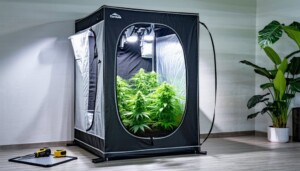 While setting up your grow tent can be an exciting endeavor, you might encounter common issues that could hinder your plants’ growth. Zipper issues, like broken zippers or misaligned teeth, can compromise your tent’s airtightness, leading to humidity control problems. Make sure you maintain your zippers regularly to avoid these setbacks. It’s important to note that zippers are a weak point in many tent designs, including Gorilla tents, so frequent inspection is advisable.
Humidity control can also be tricky; oversized dehumidifiers or insufficient ventilation might cause fluctuations that stress your plants. It’s crucial to understand that optimal humidity levels vary by growth stage to prevent issues like mold and slow plant growth.
Airflow problems often arise from improperly positioned fans or blocked ducting, which can restrict fresh air and CO2.
Additionally, check for structural integrity; undersecured frames or uneven tension can lead to sagging walls and gaps.
Finally, equipment failures, such as clogged filters or fan overloads, can disrupt your environment. By proactively addressing these common issues, you’ll create a healthier space for your plants to thrive.
Maintenance Tips
Maintaining your Gorilla Grow Tent is essential for creating a thriving environment for your plants. By following these maintenance tips, you can guarantee ideal growth and prevent issues like mold:
- Regular Cleaning: Remove all plants and equipment before cleaning. Vacuum or sweep the tent, then wipe surfaces with a mild disinfectant. Regular cleaning helps prevent pests and mold from affecting plant growth. Don’t forget to air dry completely to thwart mold growth.
- Mold Prevention: Regularly inspect seams and corners for mold. Keep humidity levels in check and guarantee proper airflow to reduce moisture retention.
- Ventilation Maintenance: Clean intake and exhaust filters to maintain airflow. Check for blockages in ducting and balance fan speeds with temperature and humidity needs.
- Equipment Monitoring: Inspect plants weekly for pests and adjust watering and lighting based on growth stages. Using energy-efficient LED lights can help manage heat output effectively.
Enhancing Your Grow Environment
To create a thriving grow environment, you’ll need to focus on several key factors that enhance your Gorilla Grow Tent’s performance.
Start by ensuring proper frame assembly for even weight distribution, which maintains environmental consistency. Align reflectors during roof placement to maximize light distribution, and use Velcro strips to secure lighting fixtures, preventing any unwanted movement.
Effective airflow management is essential, so consider an open floor design for ideal ducting placement of exhaust fans.
Make sure to tightly zip the extension skirts to prevent humidity escapes and manage moisture effectively. Additionally, the centrally placed spill pool aids in quick spill management while maintaining temperature regulation.
Frequently Asked Questions
What Is the Best Location for Setting up My Grow Tent?
To find the best location for your grow tent, look for a space with easy access for monitoring and tending to your plants.
Make certain it’s close to power outlets for light placement and ventilation setup. Avoid drafty areas to maintain temperature and humidity.
Consider using a spare room or closet for stealth.
Verify you have room for ducting and fans to optimize airflow while keeping odors in check.
How Can I Reduce Odor From My Grow Tent?
Managing odor from your grow tent is like tending to a delicate garden—every detail matters.
To achieve effective odor control, invest in a robust air filtration system with activated carbon filters. Make certain you’re using inline fans to direct filtered air outside. Regularly replace the filters to keep your system fresh.
Also, consider adding oscillating fans for better airflow, preventing stagnant air, and maintaining a pleasant environment for everyone around you.
What Is the Ideal Temperature and Humidity for My Tent?
To guarantee your plants thrive, focus on temperature control and humidity management.
During the seeding stage, keep humidity at 70-75% and daytime temperatures around 70-75°F.
In the vegetative stage, aim for 75-85°F with humidity at 50-70%.
For flowering, drop humidity to 40-50% and maintain temperatures between 65-85°F.
Finally, in late flowering, lower humidity to 30-40% and keep daytime temps around 65-75°F.
This balance helps your plants flourish beautifully.
Can I Use My Tent Outdoors?
Can you picture your tent struggling against harsh outdoor conditions?
Using your tent outdoors isn’t recommended due to its design for indoor scenarios. The heavy fabric may tear, and it lacks UV protection, risking durability.
Temperature swings and pests can wreak havoc without controlled airflow.
If you want your plants to thrive and serve your gardening goals, keep your tent indoors where it can truly shine in a stable environment.
How Often Should I Clean My Grow Tent?
You should establish a regular cleaning schedule to keep your grow tent in top shape.
Daily, you’ll want to clean up spills, remove dying leaves, and check for pests.
Weekly, wipe down your tools and sterilize water systems.
Monthly, deep-clean water reservoirs and inspect for mold.
Between cycles, vacuum and disinfect all surfaces.
Following these maintenance tips will guarantee a healthy environment for your plants and enhance their growth potential.
Conclusion
By now, you’ve set up your gorilla grow tent like a pro! With your plants nestled in their new home, you’re ready to watch them flourish. Just remember, this isn’t the 1800s—keeping your environment stable is key to maximizing your yield. Regular maintenance and a bit of troubleshooting will keep your setup running smoothly. So, sit back, relax, and let nature do its thing. Happy growing!
Explore more helpful content if you found this article insightful:
Setup, Use, and Maintenance,
Optimizing Airflow & Ventilation in Gorilla Tents,
Lighting Setup: Best LED and HPS Options for Gorilla Tents,
How to Clean and Maintain Your Gorilla Tent,
Preventing Mold and Managing Humidity Inside the Tent,
Why Gorilla Grow Tents Are the #1 Choice for Indoor Growers