
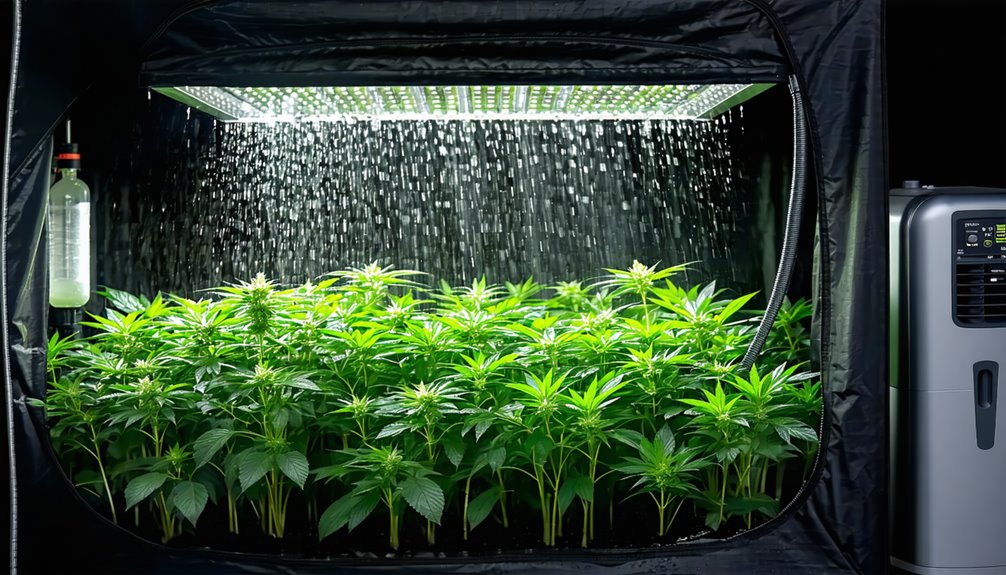
Preventing Mold and Managing Humidity Inside the Gorilla Grow Tent
To prevent mold and manage humidity in your Gorilla grow tent, start by using mold-resistant materials and conducting weekly inspections. Install WiFi-enabled sensors for real-time monitoring of temperature and humidity. Optimize airflow with strategically placed fans and maintain ideal humidity levels with a quality dehumidifier set between 40-55% RH. Adjust your lighting to reduce heat spikes and consider automated equipment controls. By following these practices, you can maintain a healthy growing environment and set your plants up for success.

Key Takeaways
- Utilize mold-resistant materials and conduct weekly inspections to minimize mold growth in the Gorilla Grow Tent.
- Maintain humidity levels between 40-55% RH using suitable dehumidifiers with auto-humidistats for optimal plant health.
- Implement WiFi-enabled sensors for real-time temperature and humidity monitoring, ensuring stable conditions for plant growth.
- Position intake and exhaust fans strategically, using oscillating fans to prevent hotspots and promote even airflow throughout the tent.
- Regularly clean the ventilation system and schedule lighting adjustments to manage heat and humidity effectively.
Mold Prevention Strategies
 Mold prevention strategies are essential for maintaining a healthy grow tent environment. Start by using mold-resistant materials for your setup, which help reduce the risk of mold growth. Conduct proactive inspections weekly, checking seams and zippers for any signs of trouble.
If you find mold, apply a vinegar solution or hydrogen peroxide to disinfect affected areas. Utilize clip-on fans to enhance airflow without overwhelming your plants, and position them strategically to break moisture droplets that can harbor mold. Regularly clean the ventilation system to ensure proper air circulation and further reduce humidity levels. Additionally, maintaining proper ventilation with fans and ventilation systems is crucial to prevent stagnant air that encourages mold growth.
After each harvest cycle, sterilize your tent thoroughly to eliminate residual spores. Don’t forget to replace or clean any used pots and tools with hospital-grade sanitizers to keep your environment spotless. Finally, avoid overwatering and guarantee quick drying after cleaning to minimize moisture buildup. By implementing these strategies, you’ll create a nurturing space that supports healthy growth while serving your plants well.
Humidity & Temperature Monitoring
How can you guarantee your grow tent maintains the ideal conditions for your plants? By leveraging advanced humidity and temperature monitoring through sensor integration, you’ll ascertain precise control over your environment.
 WiFi-enabled sensors provide real-time data, enabling you to monitor conditions remotely and respond instantly to changes. With lab-grade accuracy of ±0.3°C and ±2% RH, you can trust that your readings are reliable. Additionally, the GXi Temperature and Humidity Sensor offers automatic adjustments for fans, lights, and other devices, ensuring optimal conditions are maintained throughout the growth process. Stable temperature maintenance is crucial for optimizing growth rates and preventing stress, which these sensors help facilitate.
Integrating these sensors with smart systems allows you to automate adjustments. For instance, programmable fans can adjust airflow based on real-time data analysis, ascertaining consistent conditions during growth cycles.
Ventilation Optimization
To guarantee your grow tent thrives, effective ventilation optimization is imperative. Start by positioning intake fans near the bottom to pull in fresh air while placing exhaust fans at the top to expel stale air.
Use oscillating fans both above and below the canopy, directing airflow inward to prevent hotspots and guarantee even circulation. Balancing fan speed is essential; higher speeds work wonders during the vegetative phase, while slower speeds help during flowering to avoid drying out your plants. Proper ventilation is essential for maintaining ideal humidity levels, preventing mold and fungal issues, and ensuring optimal temperature regulation throughout the grow tent.
Establish a circulation pattern that directs air toward the canopy and out through the exhaust, maintaining negative pressure to minimize odor escape.
Consider using inline duct fans for quieter operation and clip-on fans for targeted airflow. Regular maintenance, such as cleaning fan blades and checking ducting for blockages, is critical.
With careful attention to airflow direction and fan speed, you’ll create an environment that supports healthy growth and prevents mold.
Dehumidifier Usage
Maintaining the right humidity levels in your grow tent is essential for healthy plant development, especially when you’re managing moisture control. Using a dehumidifier can be a game-changer. Here are some tips to maximize its effectiveness:
- Aim for 40-55% RH to guarantee ideal plant health.
- Choose dehumidifier brands like VIVOSUN or Spider Farmer that suit your tent size.
- Look for units with auto-humidistats to automate humidity control.
- Position your dehumidifier near plants for better airflow.
- Regularly monitor humidity levels with hygrometers to prevent stress on your plants. Additionally, consider using a 50 pint dehumidifier to effectively manage air exchange in your tent. A dehumidifier is essential for preventing mold and ensuring a thriving indoor gardening environment.
Lighting & Equipment Adjustments
 While managing humidity in your grow tent, adjusting your lighting and equipment can greatly impact moisture levels.
Using Gorilla GXi LED grow lights with smart app integration allows you to schedule and dim lights, effectively reducing heat-induced humidity spikes. The engineered spectrum for maximum yield ensures your plants receive the optimal light necessary for robust growth. Lower wattage LED strips further help by minimizing thermal output, keeping ambient temperatures in check. Maintaining lower humidity during flowering is critical to prevent mold and bud rot.
Incorporate automated temperature and humidity controllers to trigger equipment based on real-time readings, making sure you respond quickly to changes.
Pairing your exhaust system with carbon filters not only removes humidity but also eliminates odors, maintaining a healthier environment.
Don’t forget about oscillating fans; they break up stagnant air and guarantee even airflow.
With these adjustments, you’ll support your plants’ needs while minimizing the risk of mold. Embrace technology and fine-tune your setup for peak growth and humidity management!
Frequently Asked Questions
What Are the Signs of Mold Presence in My Grow Tent?
To identify mold in your grow tent, look for fuzzy gray patches on leaves or buds, black dots indicating spores, or a white powdery layer on surfaces.
Environmental factors like humidity levels exceeding 60% and stagnant air can contribute to mold growth.
Use mold identification techniques, such as checking for musty odors or shriveling buds.
How Often Should I Clean My Grow Tent to Prevent Mold?
To keep your grow tent in top shape, establish a regular cleaning schedule. You should clean surfaces weekly, disinfect tools, and inspect for any signs of trouble.
Daily maintenance is essential, too—monitor humidity, clean spills, and wipe surfaces.
Can Certain Plants Increase Mold Risk in My Tent?
Imagine a lush jungle, vibrant yet vulnerable. Certain plant types, especially those with dense foliage or high transpiration rates, can raise humidity levels, creating a haven for mold.
Fast-growing ferns or leafy peace lilies might seem inviting, but they trap moisture, encouraging unwanted growth.
What Should I Do if I Find Mold on My Plants?
If you find mold on your plants, act quickly to guarantee their health.
Start mold removal by cutting away infected tissue and isolating the affected plants to prevent spreading. Clean your tools thoroughly to eliminate any lingering spores.
It’s vital to stop overhead watering to reduce moisture on leaves.
How Can I Prevent Mold During the Drying Process?
Imagine your carefully nurtured plants, wilting under the weight of mold. To prevent this during drying, focus on effective drying techniques and airflow management.
Guarantee your buds hang with space around them, allowing air to circulate freely. Use fans to eliminate stagnant pockets and maintain consistent humidity levels.
Keep an eye on temperature, aiming for a cool, stable environment. By doing this, you protect your hard work and provide a quality product for others to enjoy.
Conclusion
To successfully stave off stubborn mold in your gorilla grow tent, stay savvy with your humidity and temperature. By balancing ventilation, utilizing dehumidifiers, and adjusting your lighting, you can cultivate a healthy environment for your plants. Remember, a proactive approach prevents problems. Keep a close watch on those moisture levels, and your greens will thrive in a pristine paradise. With these simple strategies, you’ll create a mold-free haven where healthy habitats flourish!
Explore more helpful content if you found this article insightful:
Setup, Use, and Maintenance,
Step-by-Step Guide: Setting Up a Gorilla Grow Tent,
Optimizing Airflow & Ventilation in Gorilla Tents,
Lighting Setup: Best LED and HPS Options for Gorilla Tents,
How to Clean and Maintain Your Gorilla Tent,
Why Gorilla Grow Tents Are the #1 Choice for Indoor Growers