
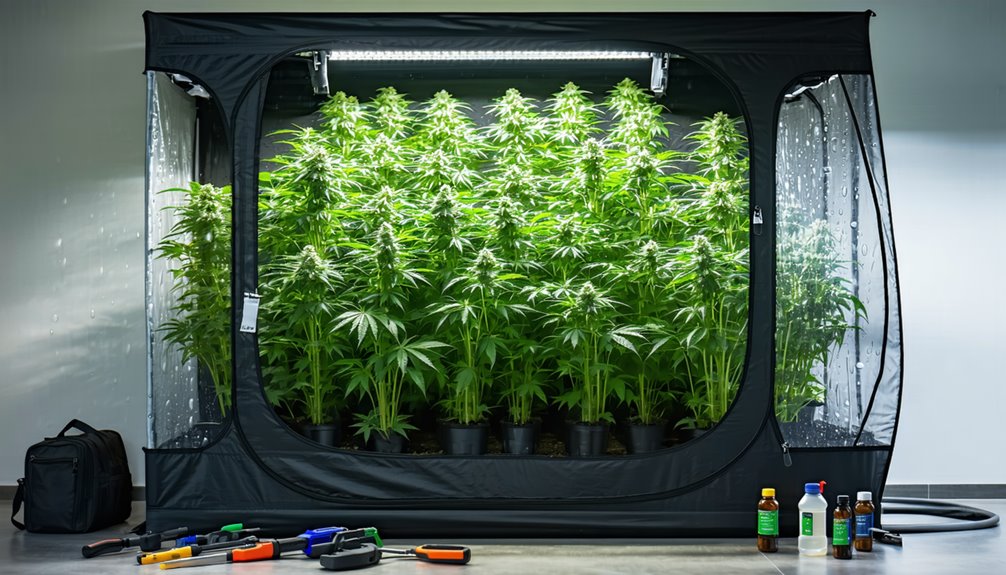
Gorilla Grow Tent Setup, Use, and Maintenance
Setting up your Gorilla Grow Tent means choosing the right location and ensuring ample height. Assemble the frame and secure the extension skirts properly. Optimize airflow with fans placed strategically, and maintain consistent temperatures while integrating CO2 during peak light. Routine cleaning and inspection help prevent pests and mold. Monitor humidity and airflow closely to keep plants healthy. Stick around, and you’ll discover even more tips to enhance your growing experience.

Key Takeaways
- Select a suitable location for your Gorilla Grow Tent, ensuring at least 6’11” height and proper access to ventilation and electrical sources.
- Assemble the tent frame, ensuring snap-tabs click into place, and install extension skirts for added height and stability.
- Optimize airflow by positioning intake fans low, exhaust fans high, and using oscillating fans for circulation at canopy level.
- Maintain hygiene by regularly cleaning the tent, inspecting for pests, and performing deep cleaning after each grow cycle.
- Monitor temperature and humidity consistently, adjusting ventilation and CO2 levels to support plant health throughout their growth stages.
Location Selection and Dimensional Planning
When you’re setting up your Gorilla Grow Tent, selecting the right location is crucial to guarantee ideal growth conditions.
 Consider your space constraints and ceiling clearance first; for example, a 4×4 tent requires at least 6’11” of height, while extensions can reach up to 8’11”. Additionally, the tent’s height adjustability allows you to maximize your grow space based on your plants’ needs. The tent is designed to support up to 300 pounds of grow equipment, ensuring your setup remains stable and secure.
Pay attention to door placement, optimizing alignment toward your primary work areas for easier access.
Confirm proper ventilation paths by positioning ducting ports to align with your HVAC system, promoting efficient airflow zones.
Factor in floor weight support and pole strength, as heavier setups need robust structures.
For compact setups, shorty tents fit well in tight spaces, while medium footprints suit rectangular rooms.
Finally, maintain seam integrity by regularly checking your durable canvas for wear and confirm your electrical access allows for smooth equipment workflow.
Proper planning allows for effective multi-tiered layouts and component storage, enhancing your grow experience.
Extension Kit Installation and Anchor Placement
After securing the right location and planning the dimensions, it’s time to focus on installing the extension kit and placing anchors for stability.
Begin by confirming that all components match your tent specifications. Avoid partial installations; dedicate your attention fully to height add-ons. Assemble the base frame using primary poles, ensuring the snap-tabs click into place for structural integrity. The extension kit increases the tent height by one or two feet, allowing for taller growing plants. Additionally, Gorilla Grow Tents are available in various sizes, accommodating diverse growing needs.
When attaching the extension skirts, start from the rear and zip halfway on one side before mirroring it on the other side for symmetry. Use Velcro strips on roof panels to guide your extension, maintaining tension balance.
For anchor placement, utilize spill pool accessories at the corners to stabilize the base. Always prioritize upgraded anchor kits for heavier setups and verify anchor compatibility with your floor material to prevent settling risks.
Airflow Optimization and Equipment Placement
 To create an ideal growing environment, you need to strategically position your airflow equipment. Start with your intake strategies by placing fans in the lower quadrant, drawing in cool air to enhance temperature balance. Proper airflow regulation is crucial as it prevents extremes and promotes overall plant health. Using inline duct fans can greatly enhance the exchange of stagnant air for fresh air, contributing to a healthier environment for your plants.
Use oscillating fans at canopy level to improve circulation patterns without blasting your plants. Exhaust positioning is essential; install exhaust fans at the top to expel hot air effectively. Incorporate passive ventilation techniques through fabric flaps for natural airflow dynamics.
For peak fan efficiency, consider using digital controllers to adjust fan speeds based on growth stages, promoting humidity control during high-humidity phases. Regular maintenance, like cleaning fan blades and checking ducting, will prevent obstructions and enhance airflow efficiency.
Temperature Control and CO2 Integration
Achieving ideal temperature control and CO2 integration is crucial for your plants’ growth and productivity. By properly managing these factors, you can reduce heat stress and maximize photosynthesis.
Here are some strategies to take into account:
- Enhance ventilation systems to exchange hot air with cooler external air.
- Use CO2 supplementation during peak light hours, especially in lower tent temperatures.
- Install circulation fans for uniform air movement and to prevent hot spots.
- Monitor temperature consistently to make sure conditions remain within optimal ranges. Additionally, consider using oscillating fans to ensure continuous air movement at different heights. Maintaining temperature stability is essential for preventing stress and optimizing growth rates.
 Remember to adjust your light schedules to avoid peak heat periods.
You’ll want to keep temperatures stable, ideally avoiding swings exceeding 10°F (5.6°C). This stability helps guarantee proper stomatal activity for CO2 diffusion.
With these techniques, your plants will thrive, and you’ll be able to serve others by sharing your successful growing experience!
Maintenance Best Practices
Managing temperature and CO2 levels sets the stage for a healthy growing environment, but maintaining that environment is just as important. Regular cleaning and vigilant upkeep guarantee your Gorilla Grow Tent remains in top condition. Regular cleaning not only prevents pest infestations by creating a less attractive environment for pests but also reduces disease risk by eliminating harmful pathogens. Additionally, optimal plant growth requires a controlled and sheltered area, which can only be achieved through consistent maintenance practices.
| Maintenance Task | Frequency |
|---|---|
| Monthly Interior Cleaning | Monthly |
| Weekly Wipe-Downs | Weekly |
| Deep Cleaning | After every grow cycle |
Establish a routine for cleaning frequency to prevent pest issues and maintain hygiene. Use mild detergents and soft-bristle tools to protect your tent’s materials. Inspect for pests and mold regularly, addressing any signs immediately to prevent infestations. Ascertain your tent is dry after cleaning to inhibit mold growth.
Taking these maintenance steps not only enhances your growing environment but also reflects your commitment to quality and care for your plants.
Cultivation Environment Strategies
Creating an ideal cultivation environment is crucial for healthy plant growth and maximizing yield. By focusing on climate monitoring and humidity regulation, you can create the perfect conditions for your plants. Here are some strategies to take into account:
- Temperature Control: Keep daytime temperatures between 65–75°F and reduce them by 5–10°F at night to mimic natural cycles. Additionally, the height of the grow tent can impact plant growth as it allows for vertical growth and proper equipment space.
- Humidity Management: Maintain a relative humidity of 50–70% to prevent mold and enhance nutrient uptake. Effective ventilation is also essential for regulating humidity levels and preventing excess moisture buildup.
- Airflow Optimization: Use exhaust fans and oscillating fans to improve air circulation and prevent heat buildup.
- Light Adjustment: Position lights 25–26″ above plants and adjust the spectrum based on growth stages to maximize photosynthesis.
Regularly monitoring these factors guarantees your plants thrive, allowing you to serve others with the best possible yield. A little diligence goes a long way in creating a flourishing garden!
Common Issues and Solutions
When setting up your Gorilla Grow Tent, you’re bound to encounter a few common issues that can impact your plants’ health and your overall yield. Here are some solutions to help you maintain a thriving environment:
| Issue | Solution |
|---|---|
| Weak zippers | Regular zipper repairs to prevent breaks. |
| Seam separation | Use seam sealing tape to guarantee a tight fit. |
| Insufficient airflow | Upgrade exhaust fans and clear blocked ports. |
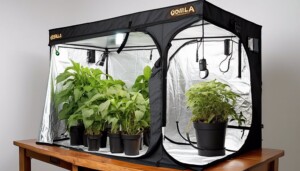 Neglecting maintenance can lead to bigger problems. Perform routine inspections for zipper and seam damage, and vacuum regularly to reduce dust. Don’t forget to monitor humidity levels and rotate your plants for even light exposure. Controlling humidity is essential to prevent mold and mildew, which can severely affect plant health. Addressing these common issues proactively will help you create a healthier space for your plants. Additionally, be aware that zipper durability has been identified as a weak point in the tent’s design, so consider reinforcing them during setup.
Frequently Asked Questions
How Do I Choose the Right Size Tent for My Plants?
To choose the right size tent for your plants, start by considering tent dimensions that match your space and the number of plants you want to grow.
For example, a 3×3 tent can comfortably fit around four plants, while a 4×4 tent can handle about eight.
Remember to factor in plant spacing; larger plants need more room.
Prioritize airflow and layout to guarantee healthy growth and ideal yields for those you serve.
Can I Use Multiple Lights in One Tent?
Did you know that using multiple lights can increase your yield by up to 30%?
Yes, you can absolutely use multiple lights in one tent! Just pay attention to light placement to avoid hotspots and guarantee even coverage.
Prioritize energy efficiency by opting for LED lights, which consume less power and generate less heat.
This way, you’re not only maximizing your plants’ growth but also being mindful of resources for a sustainable future.
What Types of Plants Are Best for Indoor Growing?
When you’re considering indoor growing, think about herb varieties like basil and mint that thrive in compact spaces.
For vegetable selection, choose crops like tomatoes and peppers, which adapt well to controlled environments.
These options not only offer fresh ingredients for your meals but also provide enjoyment as you nurture them.
How Often Should I Check for Pests?
Think of pest checks as a vigilant gardener’s watchful eye, always scanning for trouble.
You should conduct visual inspections for pest identification every 7-10 days, increasing frequency during flowering when plants are most appealing to pests.
Don’t forget to monitor after introducing new plants, as they can harbor hidden threats.
This proactive approach to pest prevention helps guarantee your plants thrive while serving the needs of those who appreciate your care and dedication.
Is Odor Control Necessary for All Indoor Gardens?
Yes, odor control‘s necessary for all indoor gardens. Strong smells can disrupt your neighbors’ peace and impact property values.
While scent masking methods like air fresheners may seem convenient, they often fall short against potent odors. Instead, consider using effective odor neutralizers that actively filter and eliminate unwanted smells.
Implementing these solutions not only improves your garden’s environment but also fosters positive relationships within your community, showing you care about those around you.
Conclusion
Now that you’ve set up your gorilla grow tent, you’re on the brink of an exciting cultivation journey. But as you immerse yourself in this green adventure, remember: challenges may lurk around the corner. Will you master airflow and temperature control, or will common issues trip you up? Stay vigilant, keep learning, and adapt your strategies. The success of your plants depends on your commitment, so are you ready to rise to the occasion?
Explore more helpful content if you found this article insightful:
Step-by-Step Guide: Setting Up a Gorilla Grow Tent,
Optimizing Airflow & Ventilation in Gorilla Tents,
Lighting Setup: Best LED and HPS Options for Gorilla Tents,
How to Clean and Maintain Your Gorilla Tent,
Preventing Mold and Managing Humidity Inside the Tent,
Why Gorilla Grow Tents Are the #1 Choice for Indoor Growers